Top 5 DevOps Tools To Learn in 2026
The DevOps industry is evolving faster than ever. With companies moving aggressively toward cloud-native infrastructure, automation, and AI-driven operations, mastering the right DevOps tools to learn in 2026 is no longer optional—it’s essential.
Whether you are a fresher, system administrator, cloud engineer, or an experienced IT professional planning a career upgrade, understanding the most in-demand DevOps tools to learn in 2026 will give you a serious competitive edge. Organizations today are not just hiring DevOps engineers—they are hiring professionals who can automate, scale, monitor, and secure complex systems efficiently.
In this blog by Lavatech Technology, we explore the top 5 DevOps tools to learn in 2026, why they matter, and how they can shape your DevOps career in the coming years.
For more information. Click here lavatechtechnology.com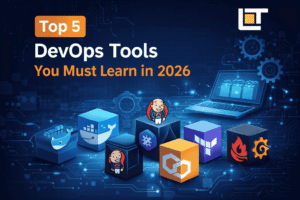
Why Choosing the Right DevOps Tools in 2026 Matters
DevOps is no longer just about CI/CD pipelines. In 2026, companies expect DevOps engineers to:
Automate infrastructure at scale
Manage containerized workloads
Ensure high availability and security
Optimize cloud costs
Deliver faster and more reliable software
That’s why selecting the right DevOps tools to learn in 2026 directly impacts your job opportunities, salary, and long-term career growth.
1. Docker – The Foundation of Modern DevOps
Docker remains one of the most important DevOps tools to learn in 2026. It revolutionized how applications are built, shipped, and deployed by introducing containerization.
Why Docker Is Still Critical in 2026
Lightweight and portable application containers
Faster development and deployment cycles
Seamless integration with Kubernetes and CI/CD tools
Widely adopted across startups and enterprises
Key Skills to Learn
If you are starting your DevOps journey, Docker is the first and most essential tool among all DevOps tools to learn in 2026.
2. Kubernetes – The King of Container Orchestration
Kubernetes has become the backbone of cloud-native infrastructure and is unquestionably one of the top DevOps tools to learn in 2026.
Why Kubernetes Dominates DevOps in 2026
Automated container orchestration
Self-healing and auto-scaling applications
Cloud-agnostic architecture
Strong demand across AWS, Azure, and GCP
What You Should Master
Pods, services, and deployments
ConfigMaps and secrets
Helm charts
Kubernetes security best practices
Companies running microservices architecture heavily rely on Kubernetes, making it one of the highest-value DevOps tools to learn in 2026.
3. Jenkins – CI/CD Automation Leader
Continuous Integration and Continuous Deployment are the heart of DevOps, and Jenkins remains a top choice among DevOps tools to learn in 2026.
Why Jenkins Is Still Relevant
Open-source and highly customizable
Thousands of plugins
Strong CI/CD pipeline support
Integrates with Git, Docker, Kubernetes, and cloud platforms
Skills You Must Learn
Jenkins pipelines (Declarative & Scripted)
Integration with GitHub and GitLab
CI/CD automation with Docker & Kubernetes
Security and performance optimization
Mastering Jenkins ensures you understand automation, which is a core requirement for all DevOps tools to learn in 2026.
4. Terraform – Infrastructure as Code (IaC) Standard
As cloud adoption grows, Infrastructure as Code has become mandatory. Terraform is one of the most powerful DevOps tools to learn in 2026 for managing cloud infrastructure.
Why Terraform Is a Must-Have Skill
Cloud-agnostic (AWS, Azure, GCP)
Version-controlled infrastructure
Faster provisioning and scalability
Reduced human errors
Key Terraform Concepts
Providers and resources
State files and remote backends
Modules and reusable code
Terraform security practices
Companies prefer DevOps engineers who can automate infrastructure, making Terraform one of the most job-oriented DevOps tools to learn in 2026.
5. Prometheus & Grafana – Monitoring and Observability
Monitoring is no longer optional. In 2026, observability is a core DevOps responsibility, and Prometheus with Grafana tops the list of DevOps tools to learn in 2026.
Why Monitoring Tools Are Critical
Real-time system health tracking
Proactive issue detection
Performance optimization
Improved user experience
What to Focus On
Metrics collection with Prometheus
Alerting and rule configuration
Grafana dashboards and visualization
Kubernetes monitoring integration
Organizations expect DevOps engineers to ensure system reliability, making monitoring tools essential DevOps tools to learn in 2026.
How These DevOps Tools Shape Your Career in 2026
Learning the right DevOps tools to learn in 2026 can help you:
Land high-paying DevOps jobs
Transition from traditional IT roles
Work on cloud-native and AI-driven systems
Become future-proof in a competitive market
DevOps engineers with hands-on expertise in these tools are among the most sought-after professionals globally.
Conclusion
The DevOps landscape in 2026 is driven by automation, scalability, and reliability. Mastering the **top 5 DevOps tools to learn in 2026—Docker, Kubernetes, Jenkins, Terraform, and Prometheus with Grafana—**will position you for long-term success in the IT industry.
If you want to build a strong DevOps career, now is the perfect time to start learning these DevOps tools to learn in 2026 with structured training and real-world projects.
Lavatech Technology is committed to helping aspiring DevOps professionals gain industry-ready skills and stay ahead in the evolving tech ecosystem.
For more information. Click here lavatechtechnology.com
Call us on +91 9607331234